
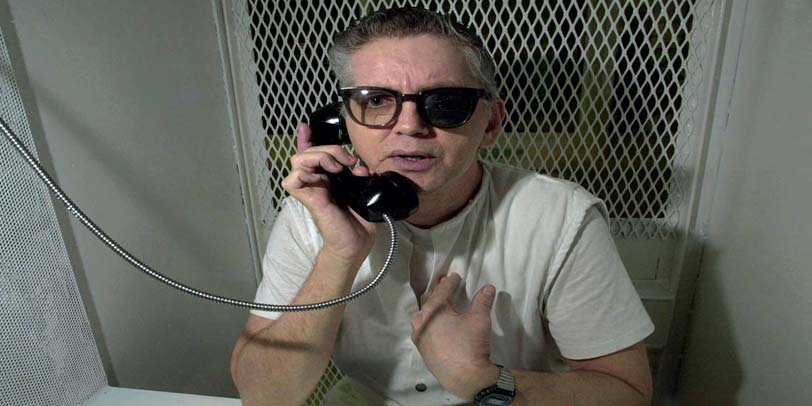
Texas Death Row Defendant with Sleeping Lawyer Deserves New Trial, Rules Full Fifth Circuit Court
FOR IMMEDIATE RELEASE
Decision Reverses Earlier Rulings Saying Sleeping Lawyer Did Not Violate Defendant’s Right to a Fair Trial
Late Monday, the United States Court of Appeals for the Fifth Circuit ruled that defendant Calvin Burdine is entitled to a lawyer who not only shows up for trial, but who remains awake throughout the proceedings as well. This rare decision by the en banc court comes after multiple reviews by the courts stating that Burdine’s Sixth Amendment right to counsel had not been violated although his trial attorney, Joe Cannon, slept repeatedly during the capital murder trial. The state of Texas has 90 days to decide if they will appeal the decision to the U.S. Supreme Court.
“Finally, common has sense prevailed,” stated Robert McGlasson, Burdine’s lawyer in the appeals process. “The full court affirmed what we have said all along, namely, that a sleeping attorney is the same as no attorney, and that a death penalty trial conducted under these circumstances violates basic notions of fairness and decency,” added McGlasson.
In October 2000, a three-judge panel of the Fifth Circuit Court ruled 2-1 that the record purportedly did not show that Mr. Cannon slept through “crucial” parts of the trial and because Mr. Burdine did not, on his own accord, make a record of this sleeping, Calvin Burdine was not entitled to a retrial.
Monday’s landmark ruling reflects a growing national concern that has permeated Congress, the Supreme Court, state legislatures, and the public about the fairness of the justice system. Recent death row exonerations have highlighted the flaws in the system and have shown that in order for all Americans to receive a fair trial - and even to prevent an innocent person from being executed - adequate counsel is essential.
“The court’s opinion Monday establishes the simple truth that the right to counsel surely must mean an attorney who not only stays awake, but indeed provides vigorous advocacy throughout all phases of the criminal proceeding, and especially during the trial,” added McGlasson.
George Kendall, veteran death penalty lawyer and staff attorney of the NAACP Legal Defense and Educational Fund Inc., said “We cannot ensure a fair and just court system unless we uphold the principles of the Sixth Amendment. In death penalty cases, in particular, where judges and juries are deciding matters of life and death, we must be vigilant to provide competent counsel. Unfortunately, contrary to claims otherwise, the case before the Fifth Circuit is not an isolated incident. There are many examples of defendants being appointed counsel who are drunk, asleep, wholly incompetent or simply inadequate. Our criminal justice system is demeaned to being a roll of the die for those who cannot afford a private lawyer.”
Peter Loge, director of the Campaign for Criminal Justice Reform at The Justice Project, stated, “Monday’s ruling is good news, but only a start. The American people believe that anyone accused of a crime deserves a fair trial. It’s up to Congress to fix a system that makes cases like Mr. Burdine’s the norm,” added Loge.
The Innocence Protection Act, a bipartisan bill pending in Congress, would institute basic and enforceable standards for court-appointed counsel and includes reasonable measures encouraging states to provide qualified and experienced lawyers to all defendants facing the death penalty. The bill, supported by both proponents and opponents of capital punishment, offers a range of common sense remedies to address wrongful convictions and to lessen the chance of fatal mistakes in the future.
In another case, The Justice Project reports that on August 31, 2001, Ronald Frye is scheduled to be executed in North Carolina - in spite of the fact that his lawyer was probably drunk during the trial and called almost no witnesses nor gave any explanation for Mr. Frye’s action. Two of the jurors in Mr. Frye’s case say that if they’d known the whole story, they would not have voted for the death penalty. Unfortunately, Mr. Burdine and Mr. Frye are not alone. A listing of just some of the many incidents of inadequate counsel is available on The Justice Project website at www.TheJusticeProject.org
Background on the Calvin Burdine Case
Douglas McCreight, the primary perpetrator of the 1993 murder in Houston of W.T. Wise, served eight years in prison after pleading guilty to murder and is now free on parole. Calvin Burdine, however, was not allowed to make a plea bargain and went to trial on the reasonable belief that he would have an adequate court-appointed defense attorney. Instead, Mr. Burdine’s lawyer, Joe Cannon (now deceased), slept repeatedly and for prolonged periods during the relatively short trial, failing to intervene at significant moments during the proceedings. During the entire 82-page state’s cross-examination of Mr. Burdine, his attorney said absolutely nothing. Calvin Burdine is now on death row for his secondary role in this murder. The State of Texas concedes these facts, yet argued before the Circuit Court that Calvin Burdine’s conviction and death sentence should be upheld because a sleeping lawyer is no different from a lawyer who is intoxicated, under the influence of drugs, suffering from Alzheimer’s disease or having a psychotic break.
• January 1984 - Houston jury convicts Calvin Burdine of capital murder and sentences him to death. Mr. Burdine is represented in this case by court-appointed attorney Joe Cannon, who takes frequent and extended naps during the trial.
• October 1986 - Texas Court of Criminal Appeals upholds the conviction. Calvin Burdine is again represented by court-appointed attorney Joe Cannon.
• August 1987 - Calvin Burdine comes within hours of execution.
• 1987 -1995 - Calvin Burdine appeals his conviction in Texas State Courts on Sixth Amendment grounds. At a state habeas corpus hearing in 1995, three jurors and a court reporter testify that Cannon often slept during the trial.
• September 1999 - U.S. District Judge David Hittner rules Calvin Burdine did not receive a fair trial and orders Burdine released or retried. Hittner declared that having a sleeping attorney was tantamount to no attorney.
• June 2000 -The Texas Solicitor General’s office argues to a panel of the Fifth Circuit Court that Calvin Burdine’s conviction and death sentence should be upheld because a sleeping lawyer is no different from a lawyer who is intoxicated, under the influence of drugs, suffering from Alzheimer’s disease or having a psychotic break.
• October 2000 - Three-judge panel of Fifth Circuit Court, 2-1, overrules the lower court’s order for a new trial. The panel rules on the grounds that the record purportedly does not show that Mr. Cannon slept through “crucial” parts of the trial and because Mr. Burdine did not, on his own accord, make a record of this sleeping, Calvin Burdine is not entitled to a retrial. Dissent states that it “shocks the conscience that a defendant could be sentenced to death” after a trial in which his lawyer slept.
• January 2001 - Ruling by Fifth Circuit panel is appealed to the full Fifth Circuit Court on the grounds that the panel’s ruling cannot be squared by the record and factfindings by which the panel is bound - and with legal principles or even basic notions of fundamental fairness and justice. This is an extraordinary event. The Fifth Circuit Court has agreed only one other time in the past decade to grant a rehearing in a death penalty case.
• August 13, 2001 - In historic ruling, the full Fifth Circuit Court reverses previous panel decision and grants Mr. Burdine a new trial.
###
The Justice Project [ http://www.thejusticeproject.org ] (TJP) is a nonprofit, nonpartisan organization that addresses issues of social justice here and abroad. TJP’s Campaign for Criminal Justice Reform is a national initiative that addresses flaws in the American justice system.


